

Bovine Immortalised Adipose Derived Stem Cells
Bovine immortalised adipose-derived stem cells (biADSCs) are engineered for robust proliferation and efficient adipogenic differentiation. Adipose-derived stem cells (ADSCs) are the resident stem cell population found within adipose tissue and are widely used in cultivated fat and cellular agriculture research. biADSCs were generated using SV40 immortalisation, enabling long-term expansion while maintaining adipogenic functionality. These adherent cells exhibit rapid growth and are optimised for scalable cultivated fat production and research applications.
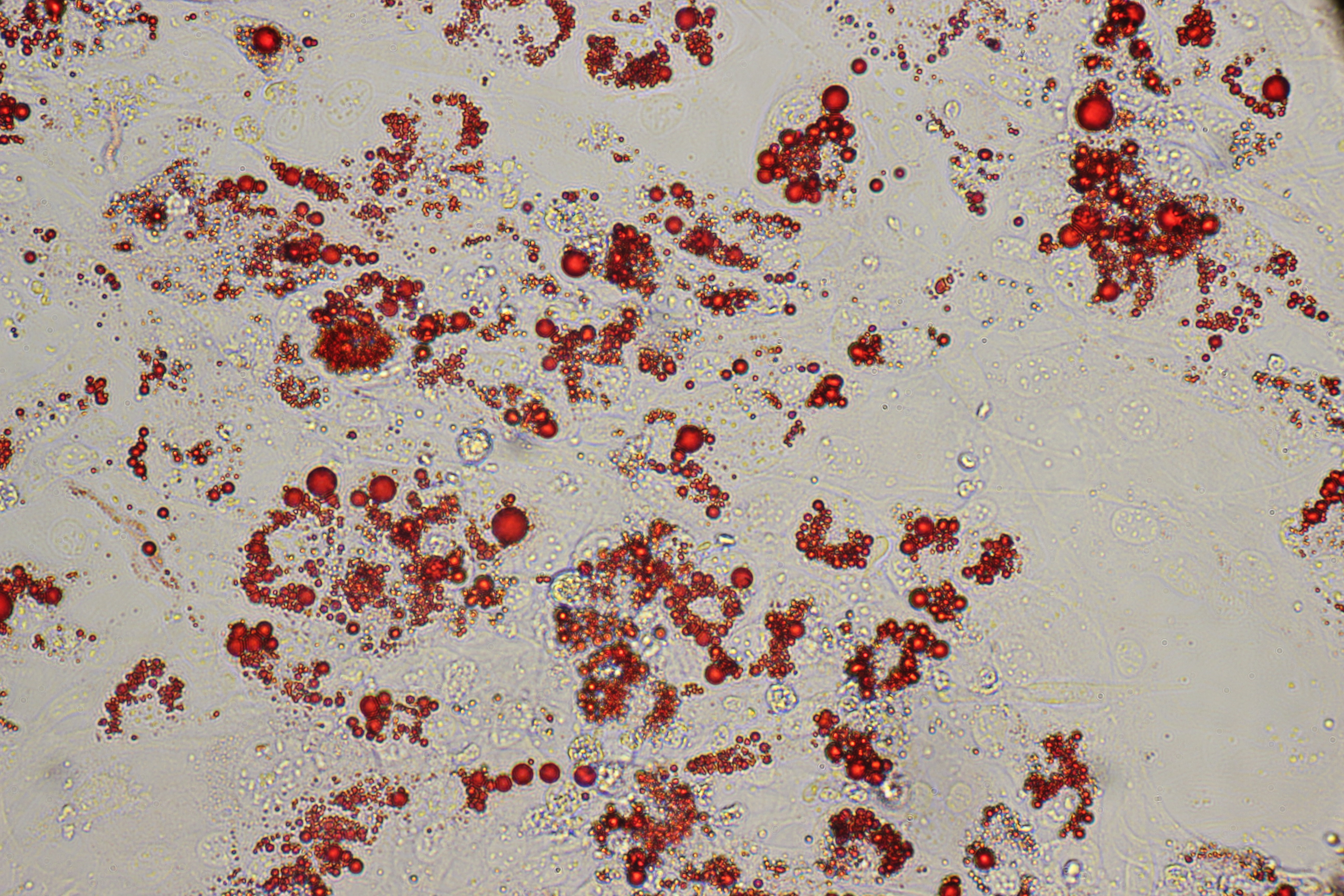
Product Features

Robust Proliferation
Immortalised bovine adipose-derived stem cell line engineered for rapid and sustained proliferation.

Efficient Adipogenic Differentiation
Provides a consistent and expandable source of lipid-forming cells for cultivated fat applications.

Easy to Use
Simple to follow expansion and differentiation protocols

Cell source and Immortalisation
Primary bovine adipose-derived stem cells were isolated from subcutaneous abdominal adipose tissue by enzymatic digestion followed by expansion on tissue culture plastic for at least two passages prior to immortalisation. Cells were immortalised using a replication-incompetent lentiviral vector encoding the Simian Virus 40 (SV40) large T antigen to induce long-term proliferative capacity while maintaining adipogenic functionality
Cell characterisation
biADSCs display characteristic adherent morphology during routine culture (Figure 1A) and exhibit robust proliferation over a4-day growth period (Figure 1B).
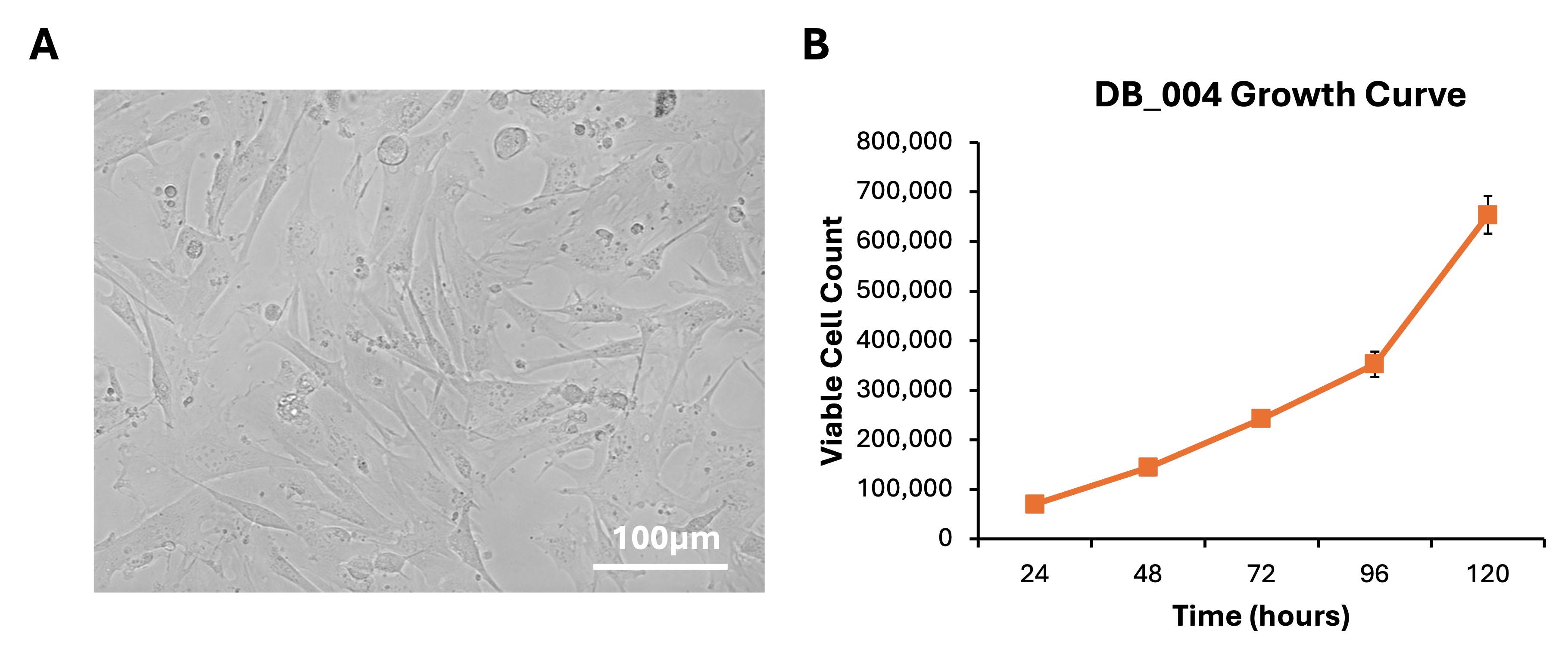
(A) Representative brightfield microscopy image showing biADSC morphology. (B) Growth curve of biADSCs over a 4-day culture period.
Adipogenic Differentiation Characterisation
biADSCs retain adipogenic lineage potential following immortalisation. Following a 7-day adipogenic differentiation protocol, cells form Oil Red O-positive adipocytes and exhibit increased expression of the adipogenic markers PPARG and ADIPOQ (Figure 2A–B).
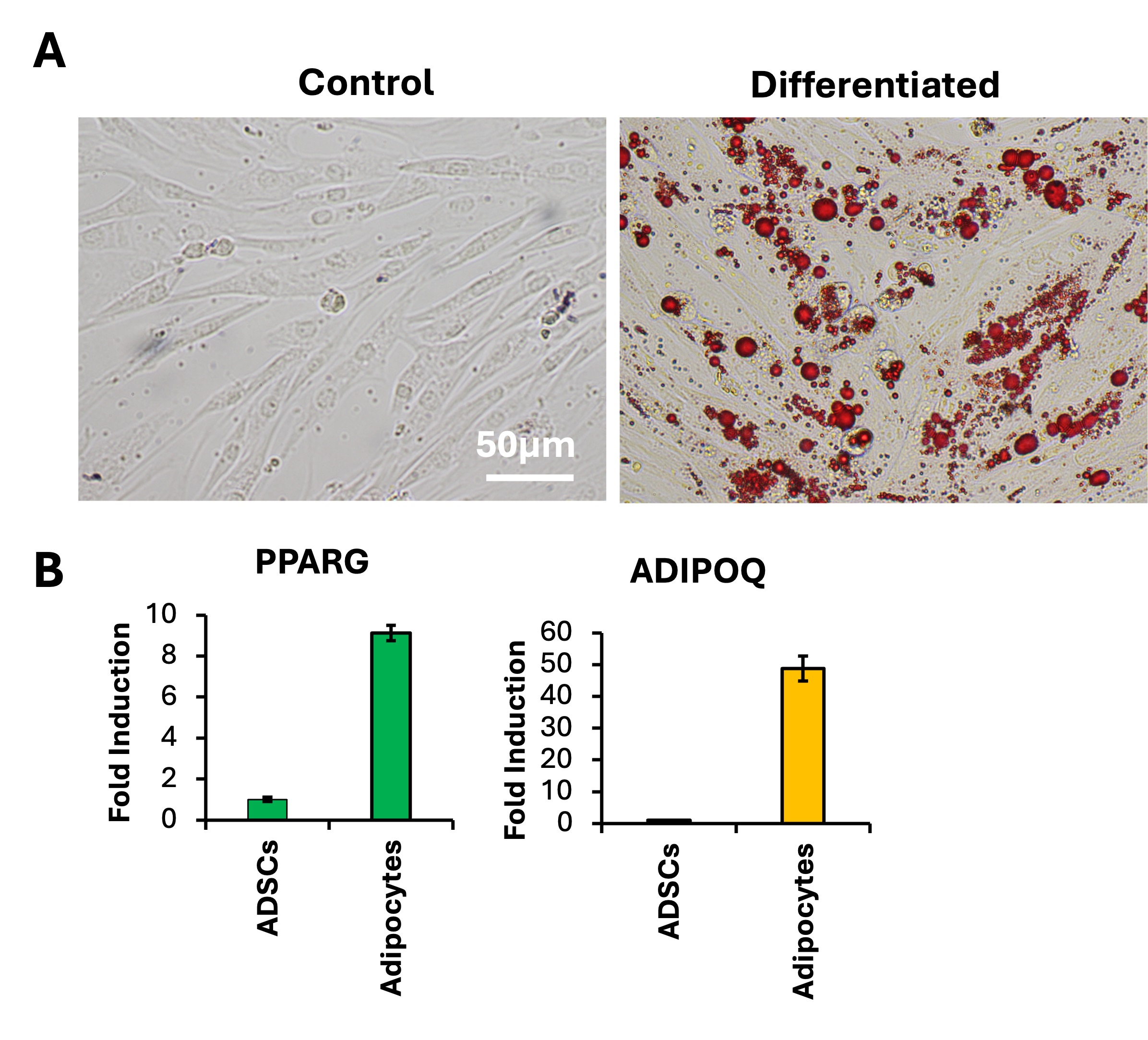
(A) Adipogenic differentiation of biADSCs visualised by Oil Red Ostaining.
(B) Relative fold induction of adipogenic markers ADIPOQ and PPARG in differentiated adipocytes compared with undifferentiated control ADSCs.
Compatible Processes


Product information
Cryopreserved cells, one vial containing 1x10⁶ cells


