
Porcine immortalised adipose-derived stem cells
Porcine immortalised adipose-derived stem cells (piADSCs) are an immortalised adipose-derived stem cell line engineered for rapid proliferation and scalable cultivated fat applications. These cells exhibit an average population doubling time of less than 12 hours. piADSCs are easy to handle, highly expandable and retain adipogenic differentiation potential following immortalisation, making them well suited for cultivated fat research, process development, and scalable manufacturing workflows.

Product Features

Quick
Rapid population doubling times.

Scalable
Adaptable to a range of scalable bioprocess conditions and medias to fit your R&D, regulatory and commercial needs.

Easy to Use
Simple to follow expansion and differentiation protocols. These cells grow like mad!

Cell Source and Immortalisation
Following enzymatic digestion of fresh porcine abdominal adipose tissue, cells were cultured on treated cell culture plastic for 2 passages to isolate and expand the ADSC population. ADSCs were immortalised by incubation with Lentivirus containing the SV40 large T antigen for 24 hours. Immortalised cells were selected by treatment of cultures with neomycin for 7 days. Lentiviral vectors are integrative so the expression of the SV40 large T antigen is constitutive. The SV40 large T antigen suppresses the expression of the cell cycle regulator P53 locking cells in the cell cycle. piADSCs test positive for the expression of the SV40 large T antigen and negative for residual Lentivirus. Following immortalisation piADSCs retain their capacity for adipogenic differentiation.
Cell Characterisation
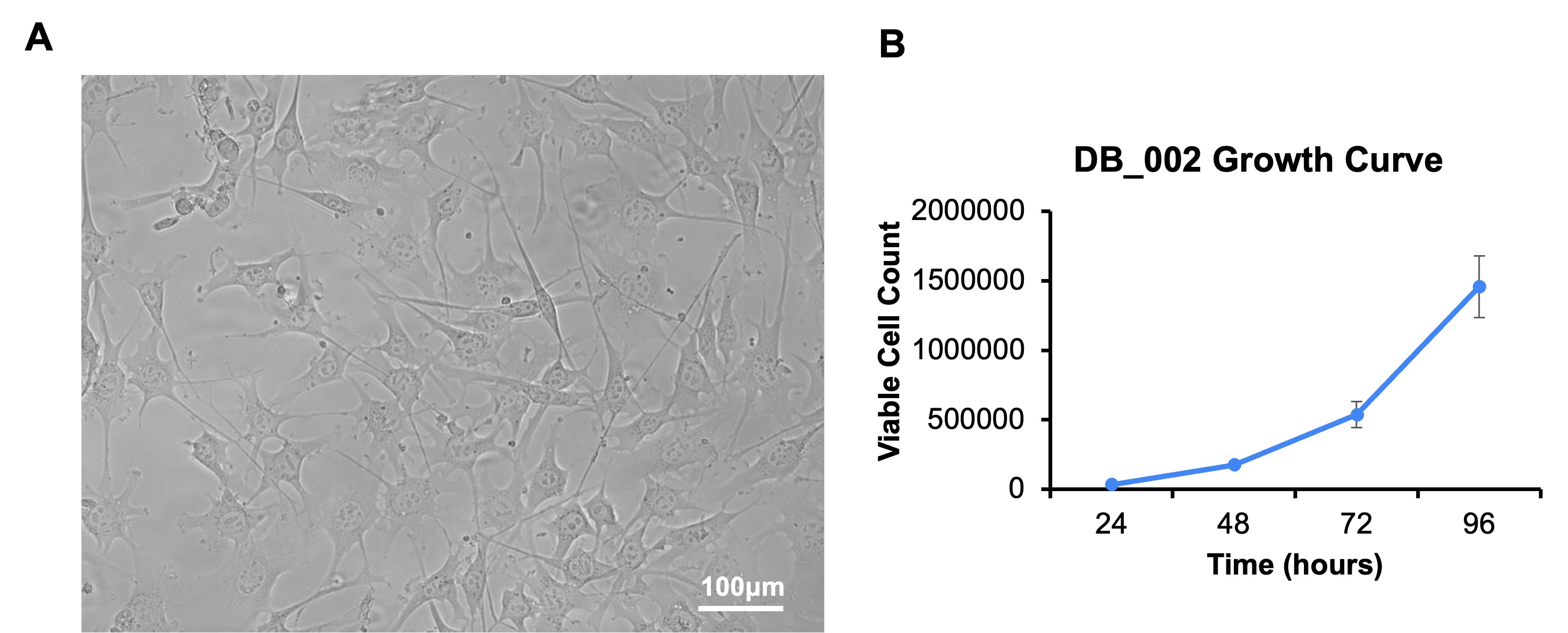
DB_002 cells demonstrate rapid proliferation under standard culture conditions, with growth curve analysis confirming high expansion potential over a 4-day culture period (Figure 1).
Adipogenic Differentiation Characterisation
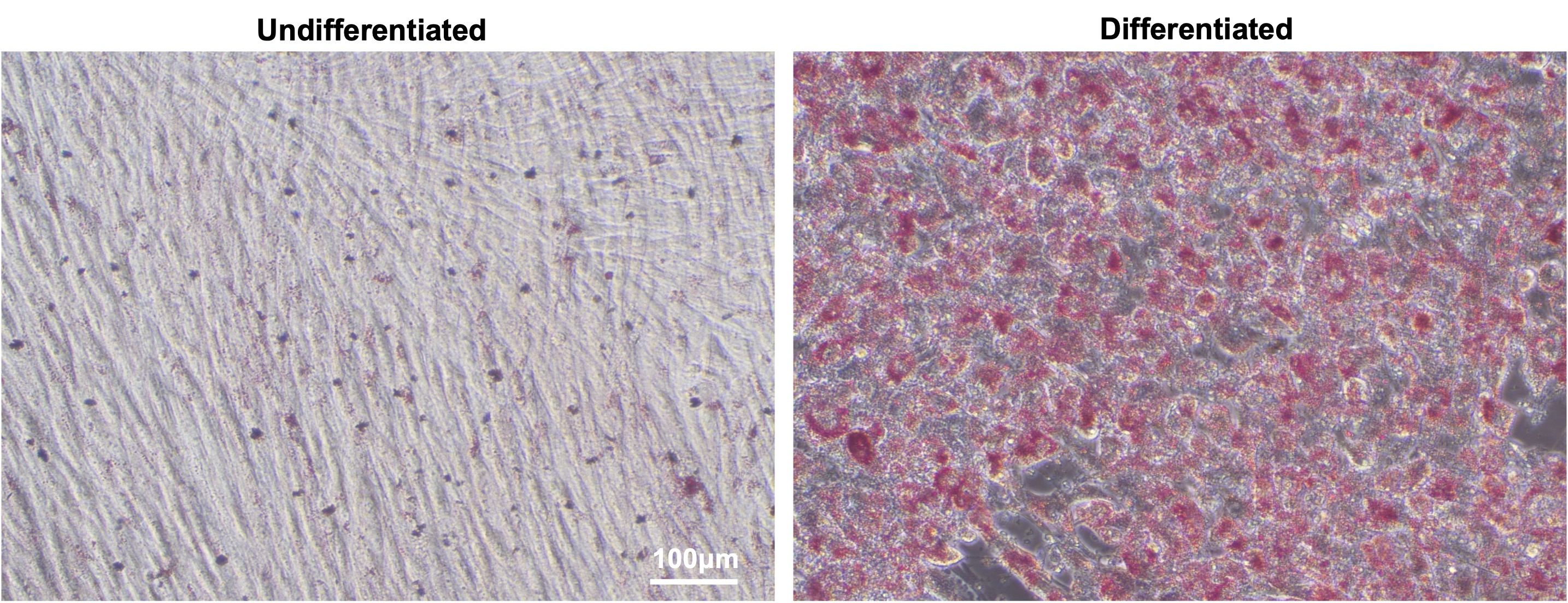
piADSCs retain adipogenic lineage potential following immortalisation. Differentiation cultures accumulate intracellular lipid droplets following adipogenic induction, visualised by Oil Red O staining (Figure 2).
Microcarrier Suspension Adaptation
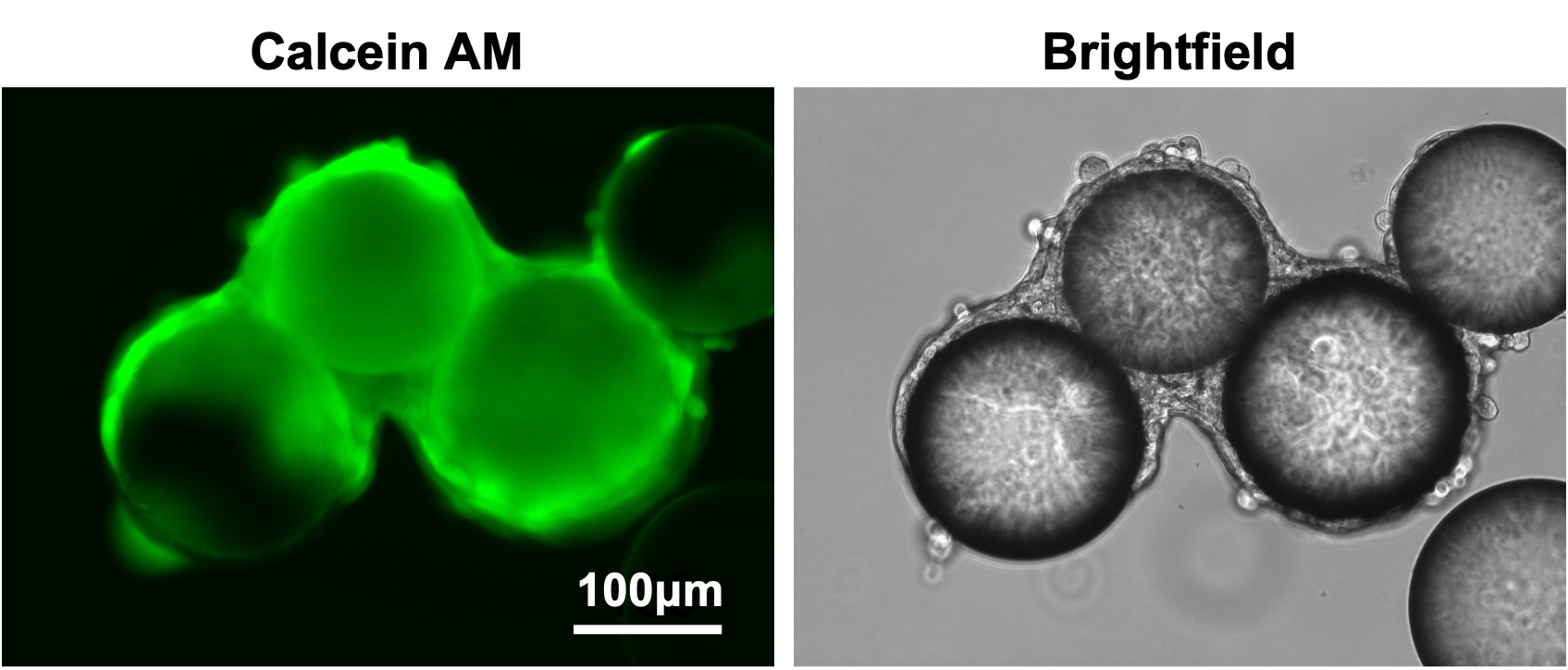
piADSCs readily attach to and expand on microcarriers while maintaining high viability under dynamic suspension conditions, supporting scale-up and bioprocess development applications (Figure 3)
Compatible Processes


Product information
Cryopreserved cells, one vial containing appx. 1 x 10⁶ cells


Species Specific Growth Factor Testing: QKine x Dragon
Species Specific Growth Factor Testing: QKine x Dragon