
Suspension-Adapted Porcine Induced Pluripotent Stem Cells
Suspension-adapted porcine induced pluripotent stem sells (DB_001s) are engineered for scalable suspension culture applications. Derived from the DB_001 porcine iPSC line, these cells have been adapted to grow as stable aggregates in suspension culture while maintaining robust proliferation and pluripotency marker expression. DB_001s cells retain tri-lineage differentiation potential into ectoderm, mesoderm, and endoderm lineages. Their suspension growth characteristics make them particularly suitable for bioreactor-based expansion and large-scale manufacturing workflows.
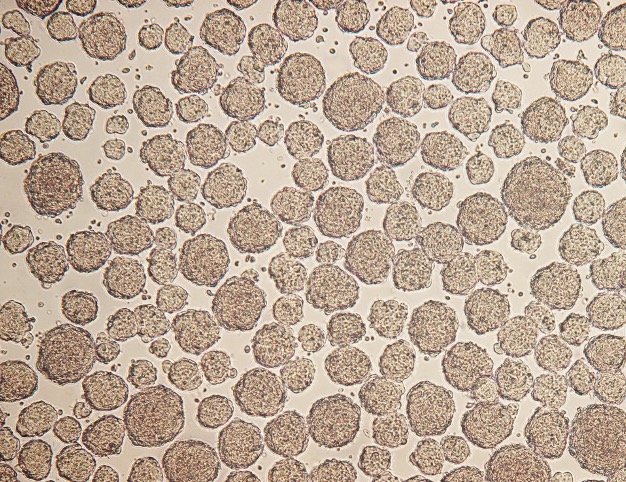
Product Features

Suspension Culture
Optimised for aggregate-based suspension culture systems and scalable bioreactor expansion workflows

Pluripotent
Maintain expression of key pluripotency markers including OCT4, SOX2, and SSEA4 during suspension culture.

Tri-lineage Differentiation
Retain the ability to differentiate into ectoderm, mesoderm, and endoderm lineages

Cell Characterisation
piPSCs were adapted to aggregate-based suspension culture over 10 passages using orbital shaker culture conditions. DB_001s cells form uniform aggregates during suspension culture and maintain rapid expansion kinetics over multiple passages (Figure 1). Flow cytometry analysis following long-term suspension adaptation confirms continued expression of OCT4, SOX2 and SSEA4, demonstrating maintenance of pluripotency under suspension conditions.
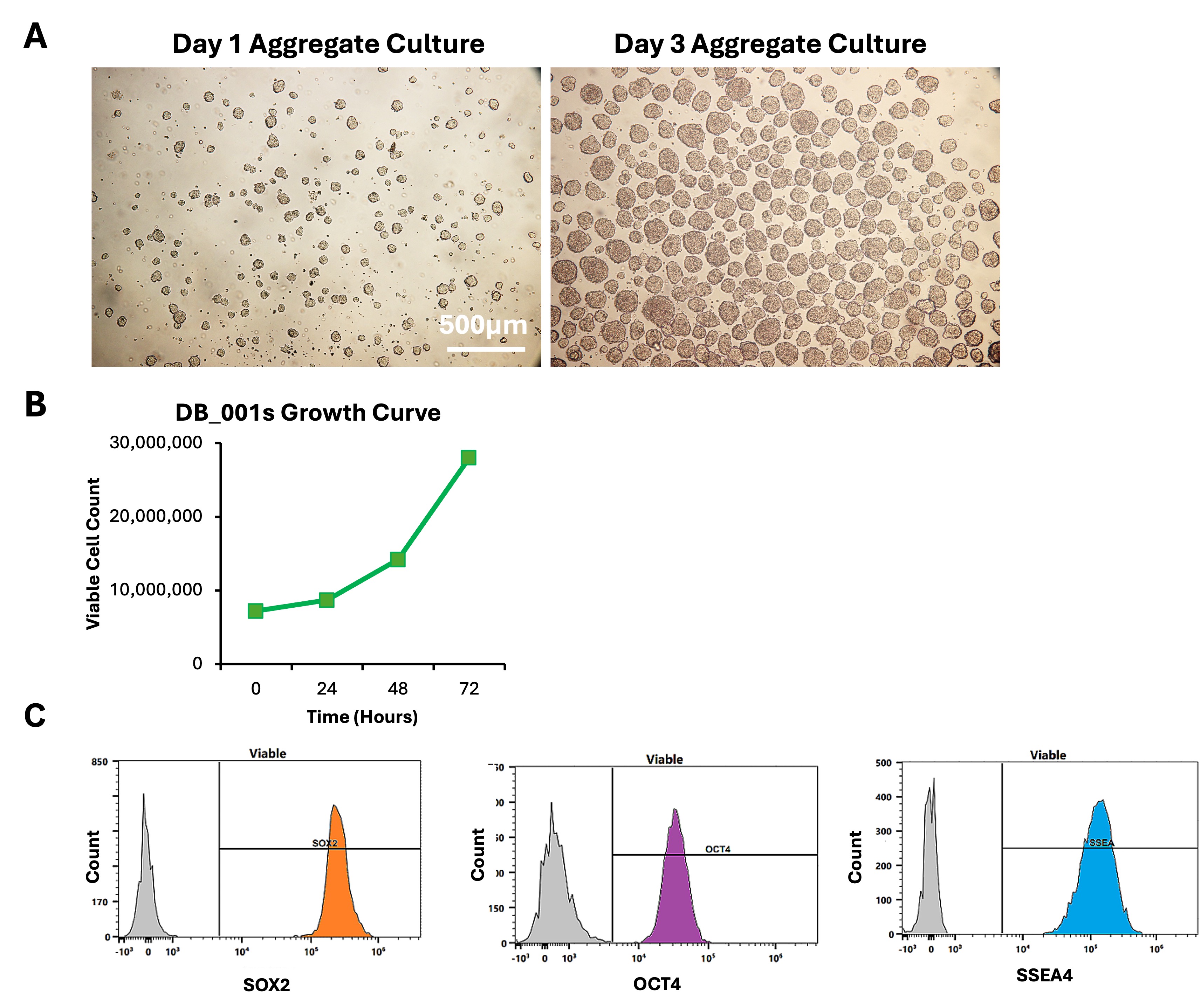
(A) Representative brightfield microscopy images of DB_001s aggregates at Day 1and Day 3 of suspension culture. (B) Growth curve of DB_001s during suspension expansion. (C) Flow cytometry histograms showing expression of OCT4, SOX2, and SSEA4 after 10 passages in suspension culture.
Differentiation Characterisation
Suspension-adapted piPSCs retain tri-lineage differentiation potential following aggregate adaptation. Embryoid body differentiation demonstrates expression of lineage-specific markers associated with ectoderm, mesoderm and endoderm development (Figure 2).
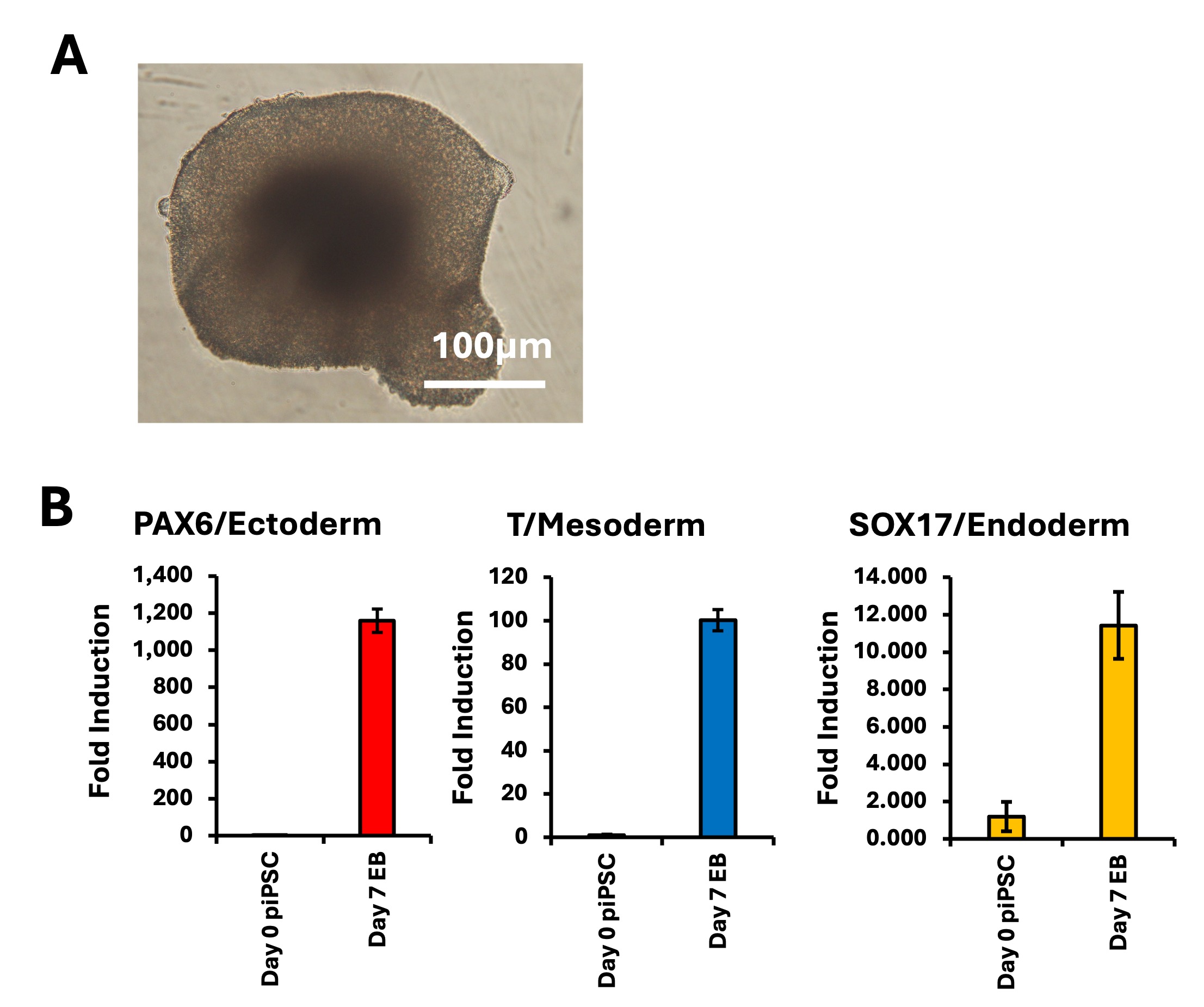
(A) Representative image of embryoid body differentiation. (B) qPCR quantification of Pax6 (ectoderm), T (mesoderm) and SOX17 (endoderm) expression.
Compatible Processes




Product information
Cryopreserved cells, one vial containing appx. 2 x 10⁶ cells


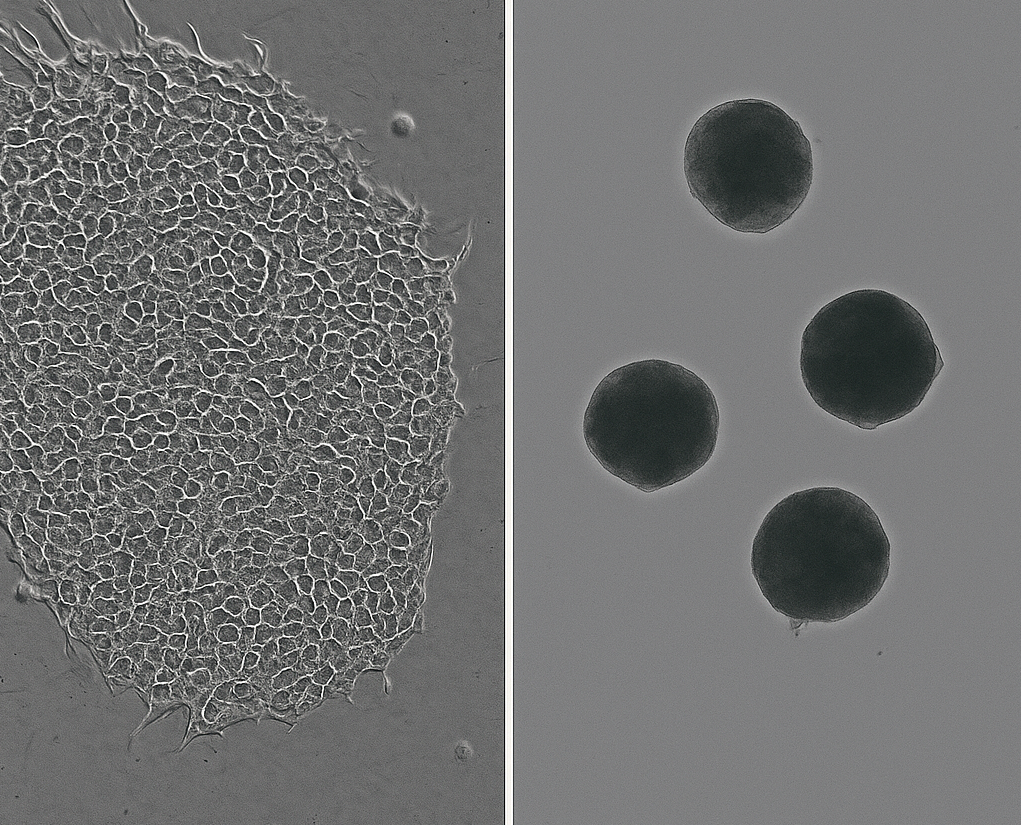
Cytocaf Polymers Enable Defined 2D and 3D piPSC Culture: Marra Bio x Dragon
Cytocaf Polymers Enable Defined 2D and 3D piPSC Culture: Marra Bio x Dragon